Understanding Production Curtailment
This article will cover the following topics:
How the production calculation assigns volumes to calendar months
Defining curtailment and the different ways to apply it
Production interference calculation example
Production limit calculation example
Downtime calculation example
How the production calculation assigns volumes to calendar months
For the production calculation, Pod2 Planner uses actual calendar days of the month to assign production volumes. For example, a well producing in a leap year will have 29 days of production in February.
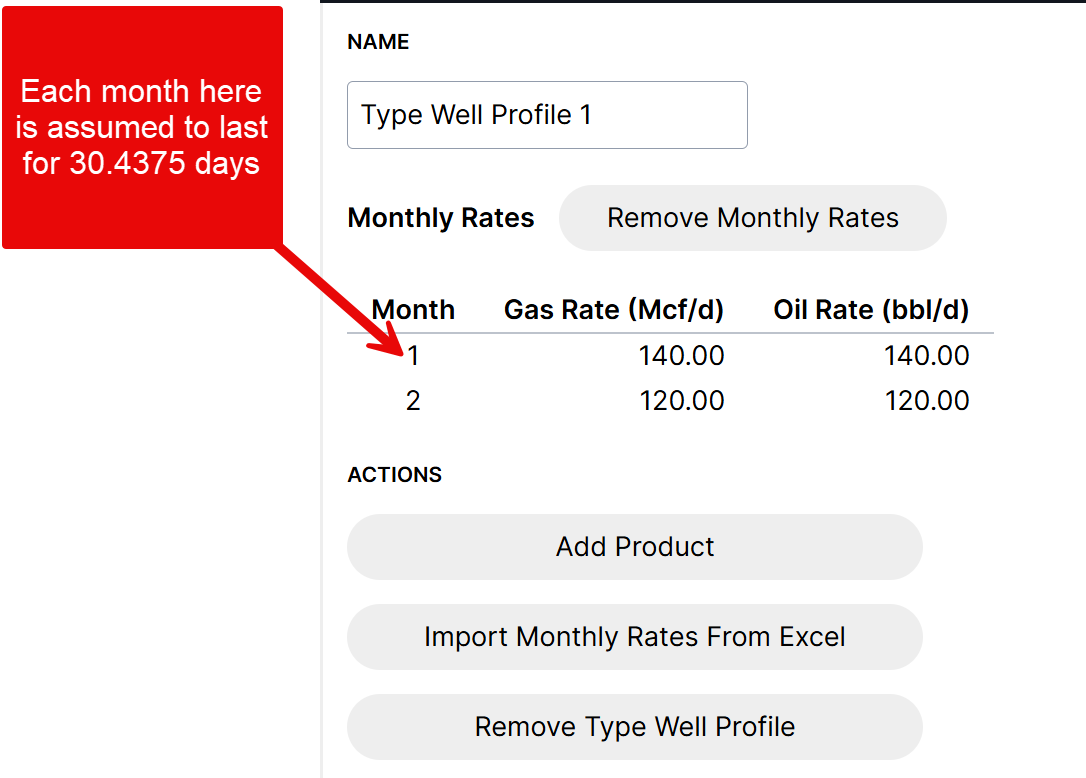
When inputting production forecast data using monthly rates, the months are assumed to represent 30.4375 days, and are then allocated to the calendar months based on first production date.
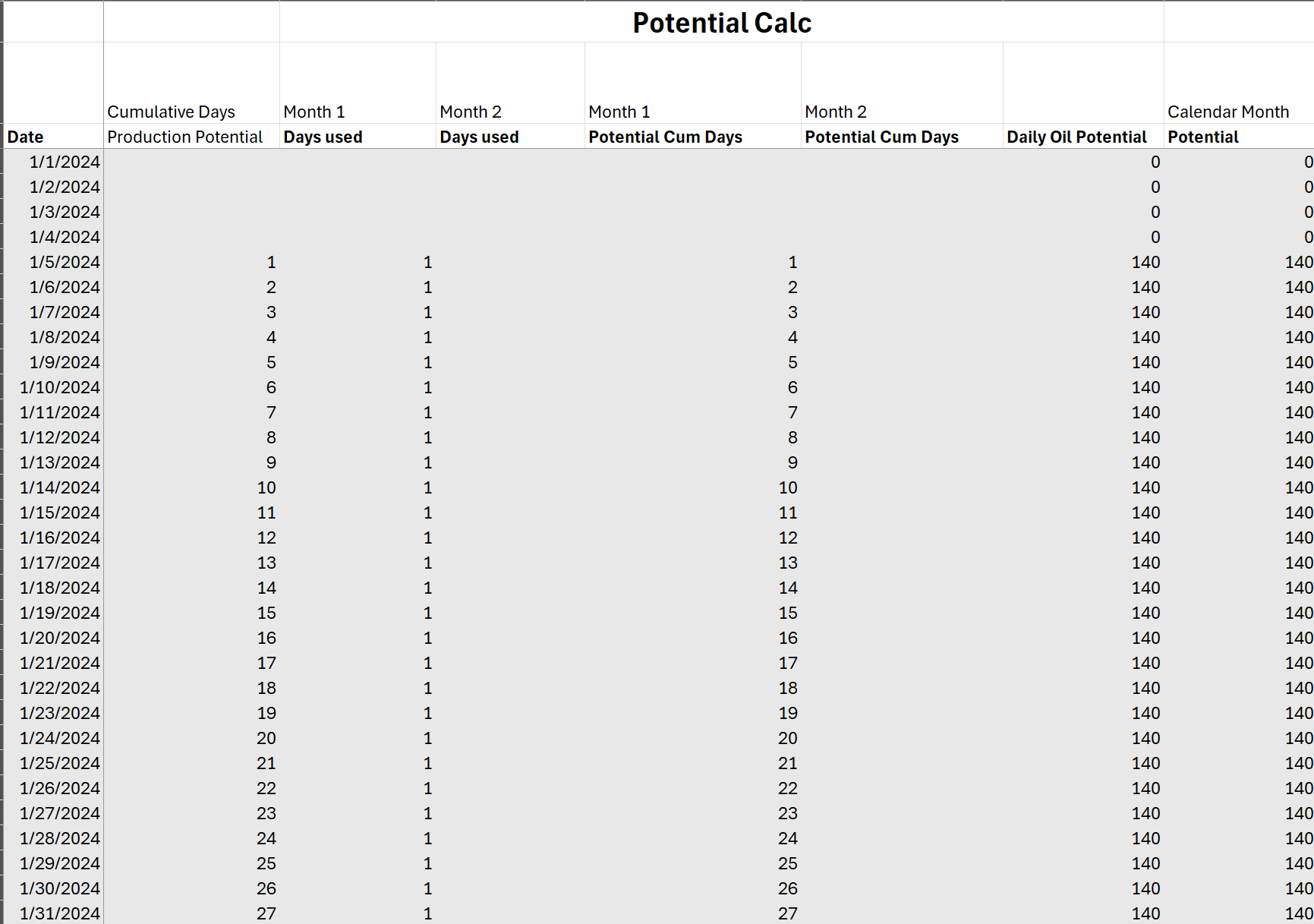
If this type well profile is assigned to a well with a production start date of January 5th, 2024, the resulting first month oil production (January) have a total volume of 3640 bbl and will have produced for 27 days of the month
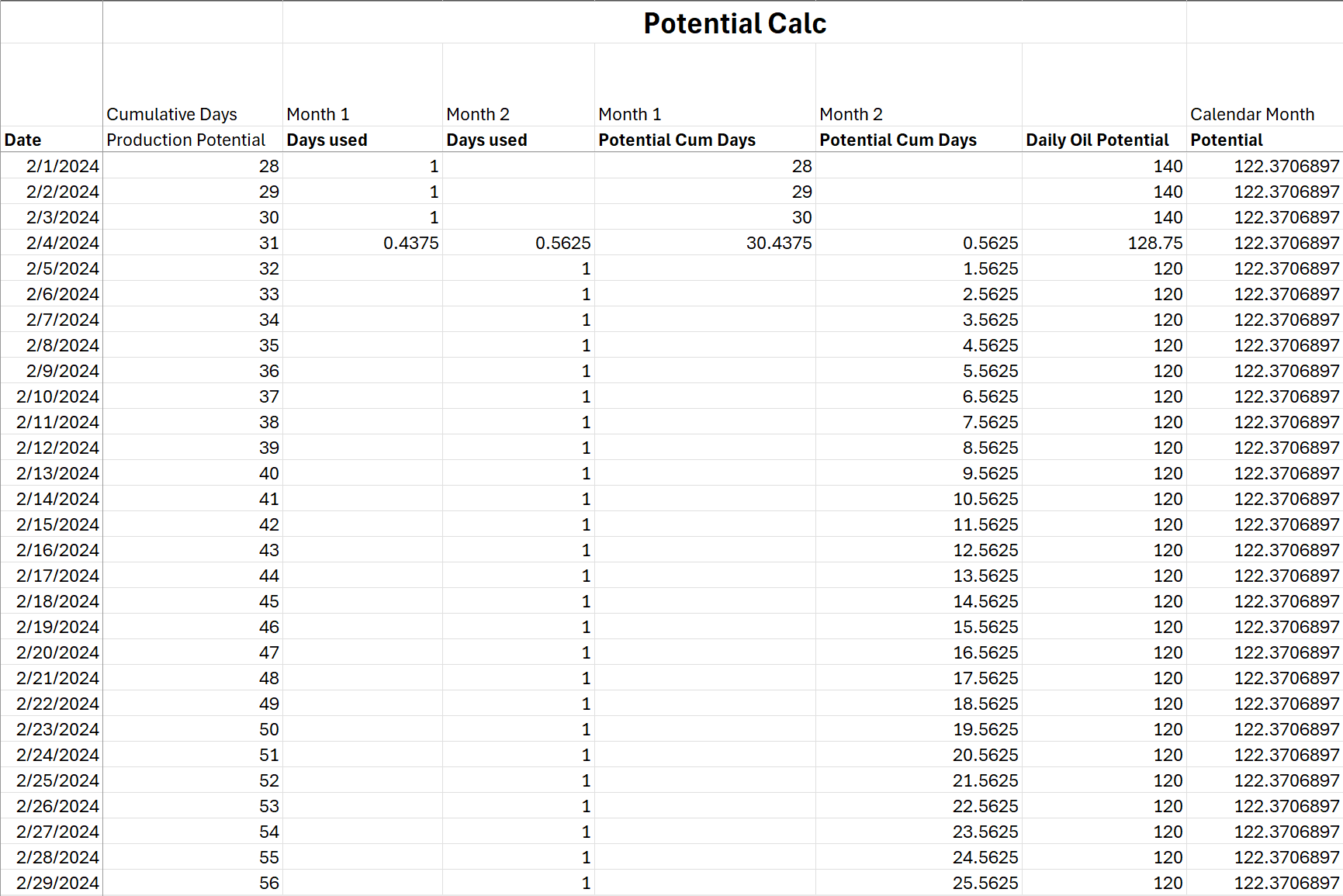
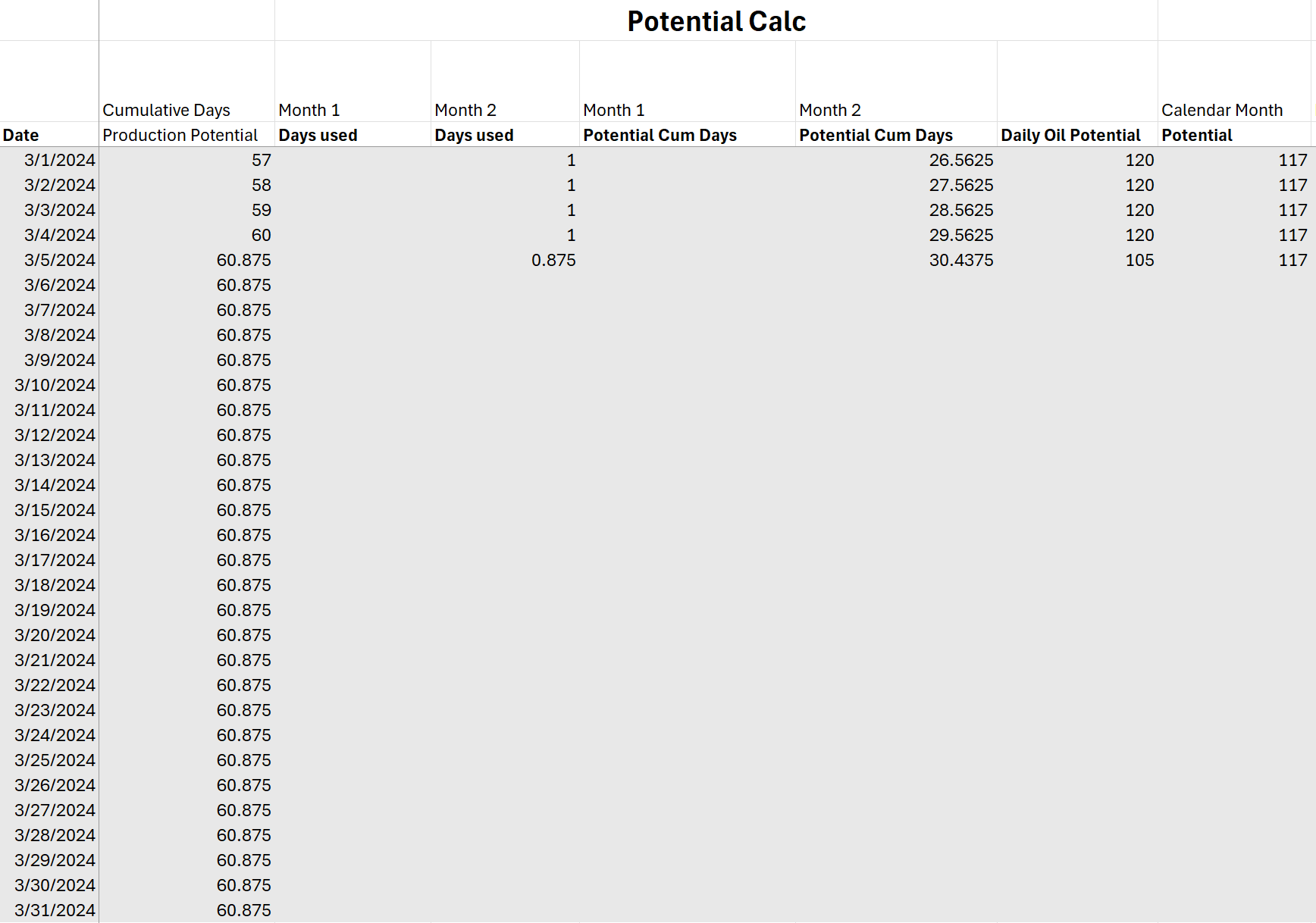
Moving on to February, there are still (30.4375 - 27) = 3.4375 days left of 140 bbl/d production. The forecast then switches over to 120 bbl/d for the remaining 25.5625 days of the month. Note the effective monthly rate that shown in the image below. The effective monthly rate is important in factoring in the curtailment calculations shown later on.
For the final month of production, there are 3.875 days left of production in the forecast, which results in 465 bbl of production
Defining curtailment and the different ways to apply it
In Planner, curtailment can be applied in the following ways:
Using offset activity interference to shut-in production of wells based on distance conditions or attribute conditions
Applying a production limit that curtails production to stay under a specified production rate
Applying percentage downtime on a well
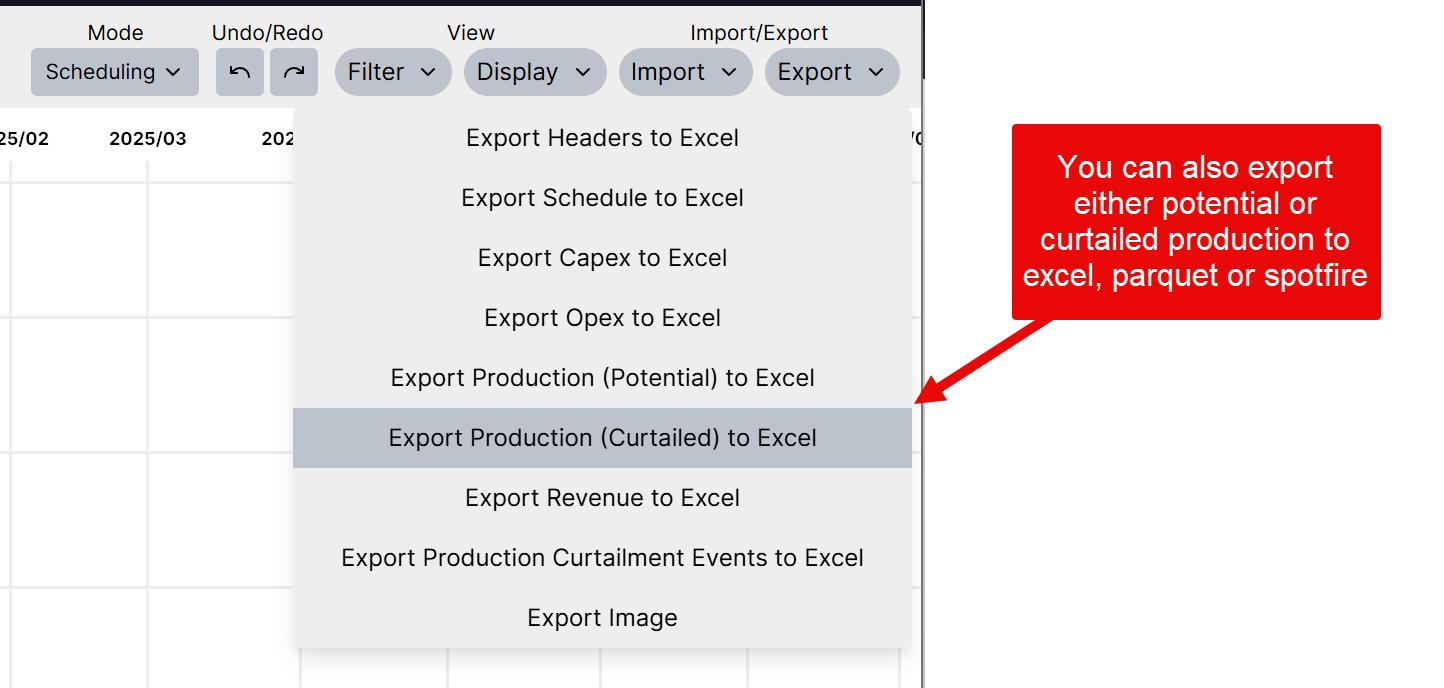
When viewing production results in Planner, you can choose between potential or curtailed production. Potential production shows results without any curtailment applied, while curtailed production includes all applied curtailment.
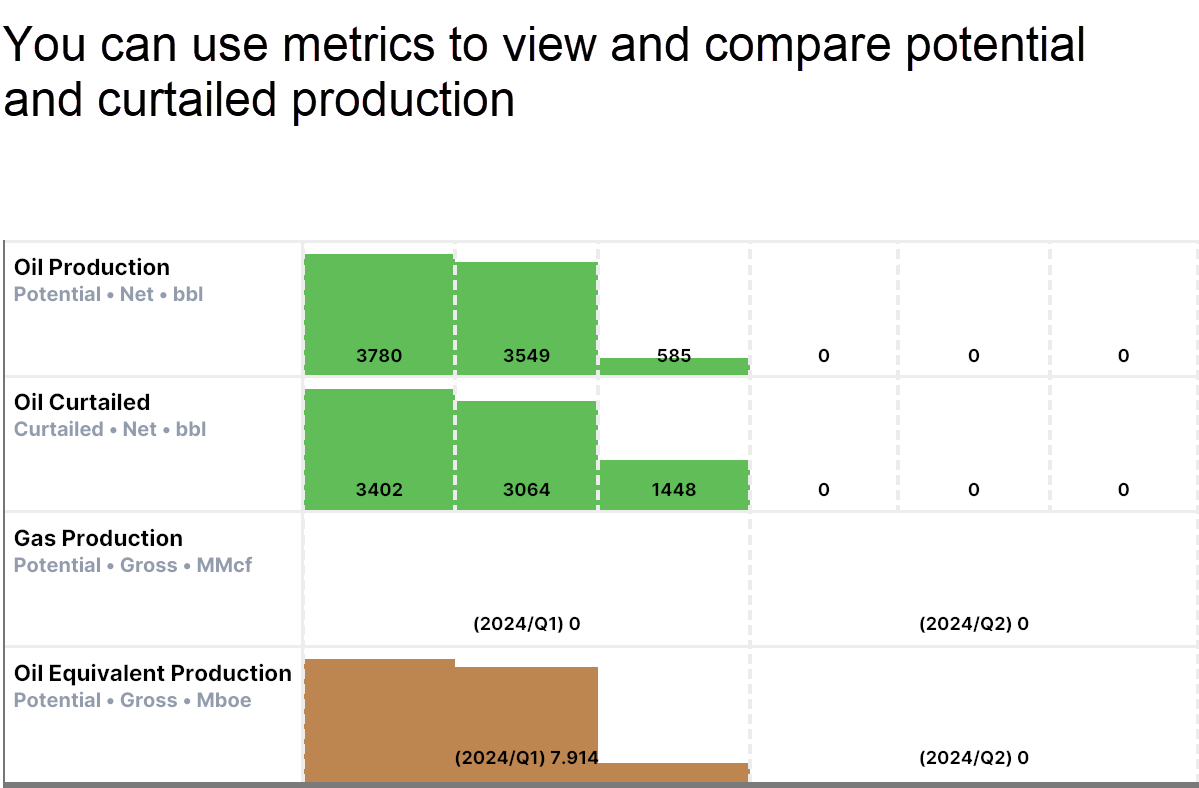
The guide below will walk through examples of each type of curtailment, explaining how production potential is affected.
Interference Calculation Example
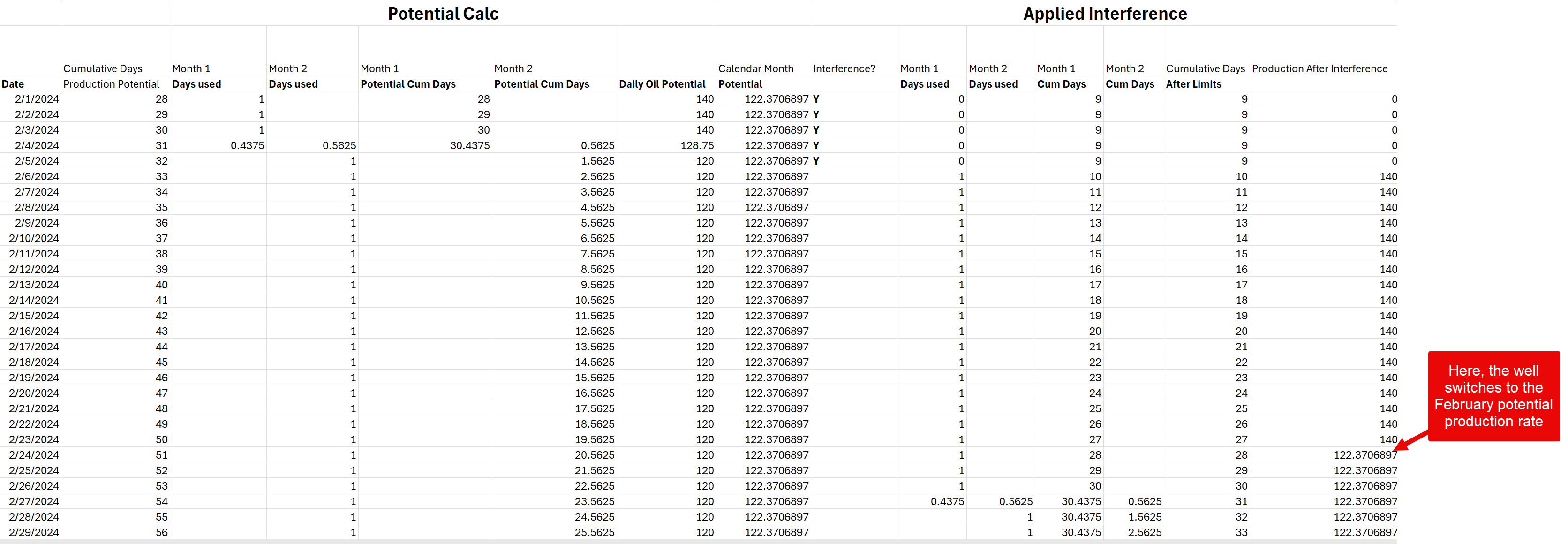
Starting with the same forecast used in the production potential example, the well is going to be shut-in due to offset activity interference from January 14th, 2024 to February 6th, 2024 - a total of 23 days
For the first month (January), the well produces 0 bbl/d from January 14th to January 31st due to the interference. Total production for the month is 1260 bbl and 9 days of production
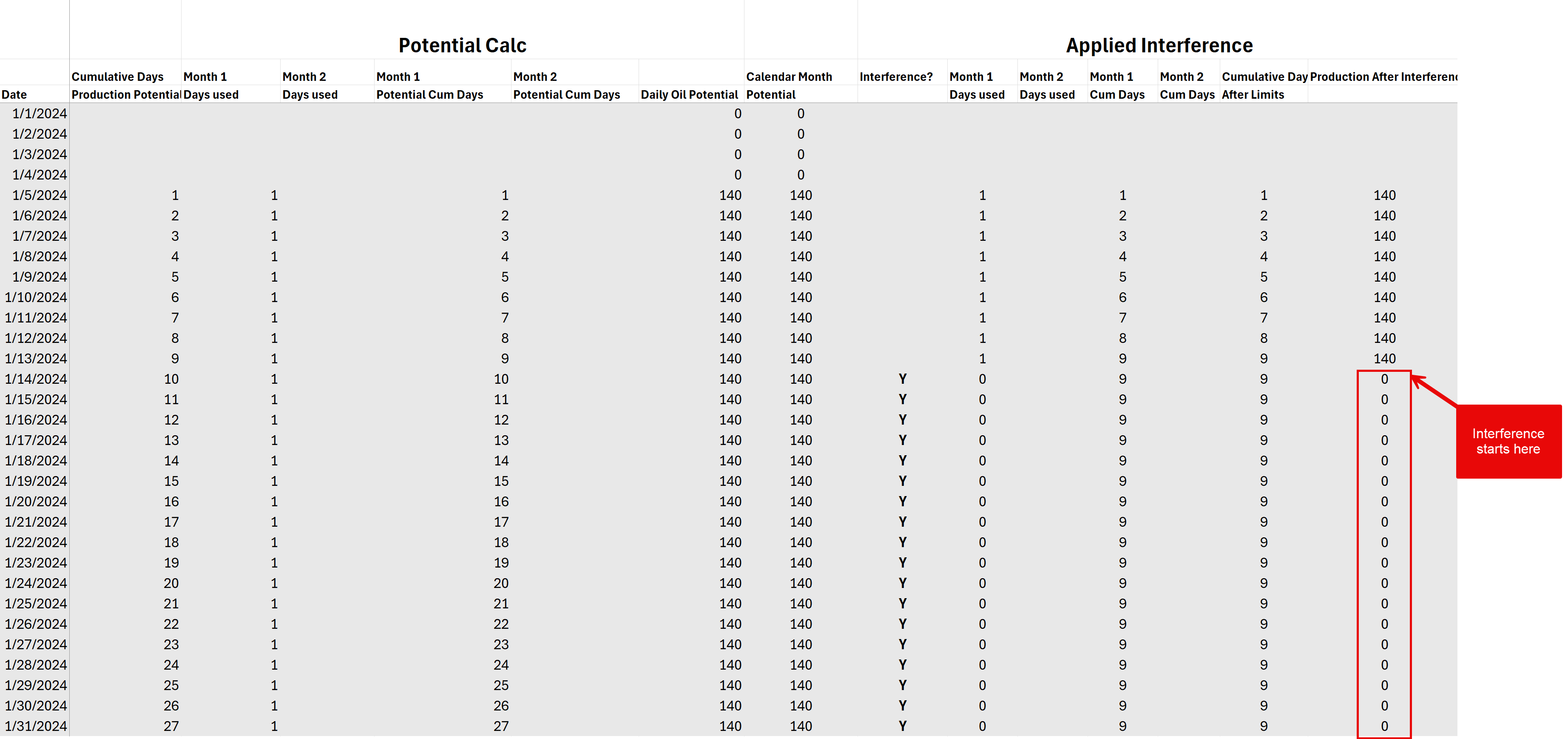
For February, the well continues to be shut-in for 5 more days, then resumes production at a rate of 140 bbl/d for 18 more days of the first month's potential. It then switches to 122.371 bbl/d for the remaining 6 days of the month. Note that this rate of 122.37 is equivalent to the second month's effective rate from the potential calculation.
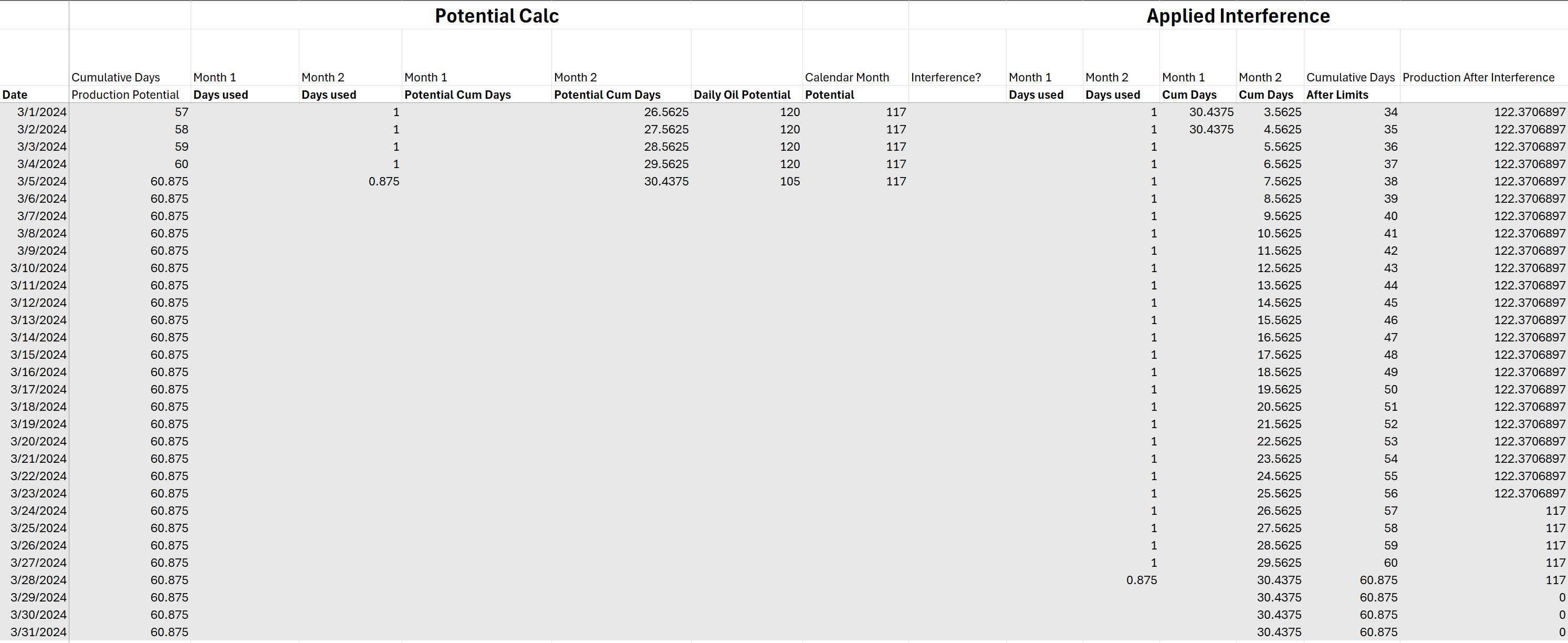
For March, there is no more interference, so the well produces for 23 more days of the February potential (122.371 bbl/d) and then produces for 5 days of the March potential (117 bbl/d)
Production Limits Calculation Example
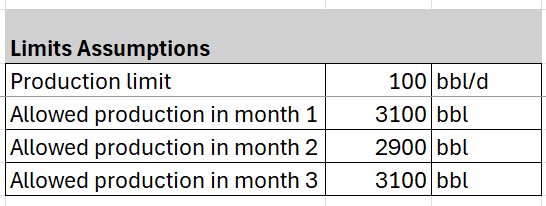
For this example, a production limit of 100 bbl/d is applied from January 1st 2024 - December 31st 2024
Production limits are volume-based. In this example, the 100 bbl/d limit applied for January, February, and March results in the following allowed volumes:
Looking at January, the total production volume hits the limit of 3100 bbl after ~22.14 days of production
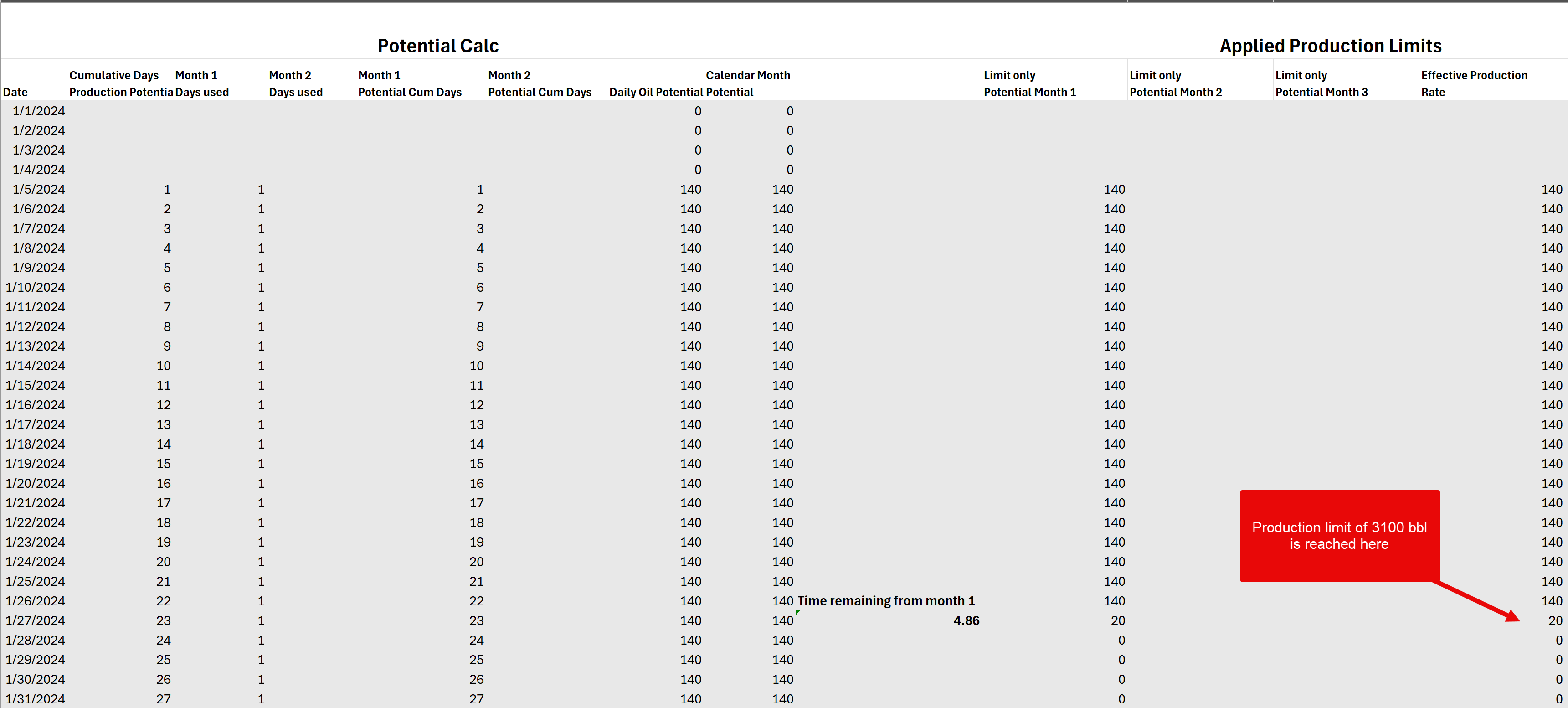
In February, there are ~4.86 days of the first month's potential of 140 bbl/d. Production then switches to the second month potential of 122.37 bbl/d until the limit of 2900 bbl is reached
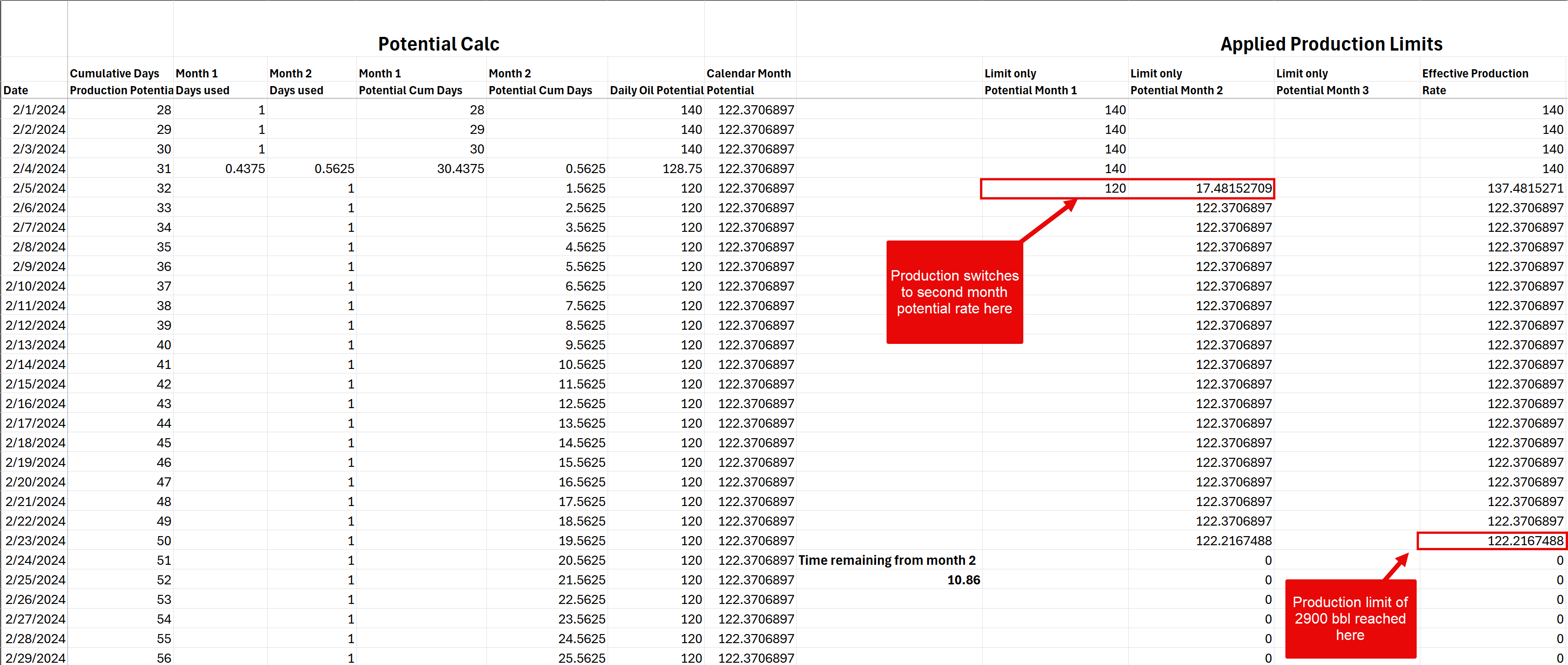
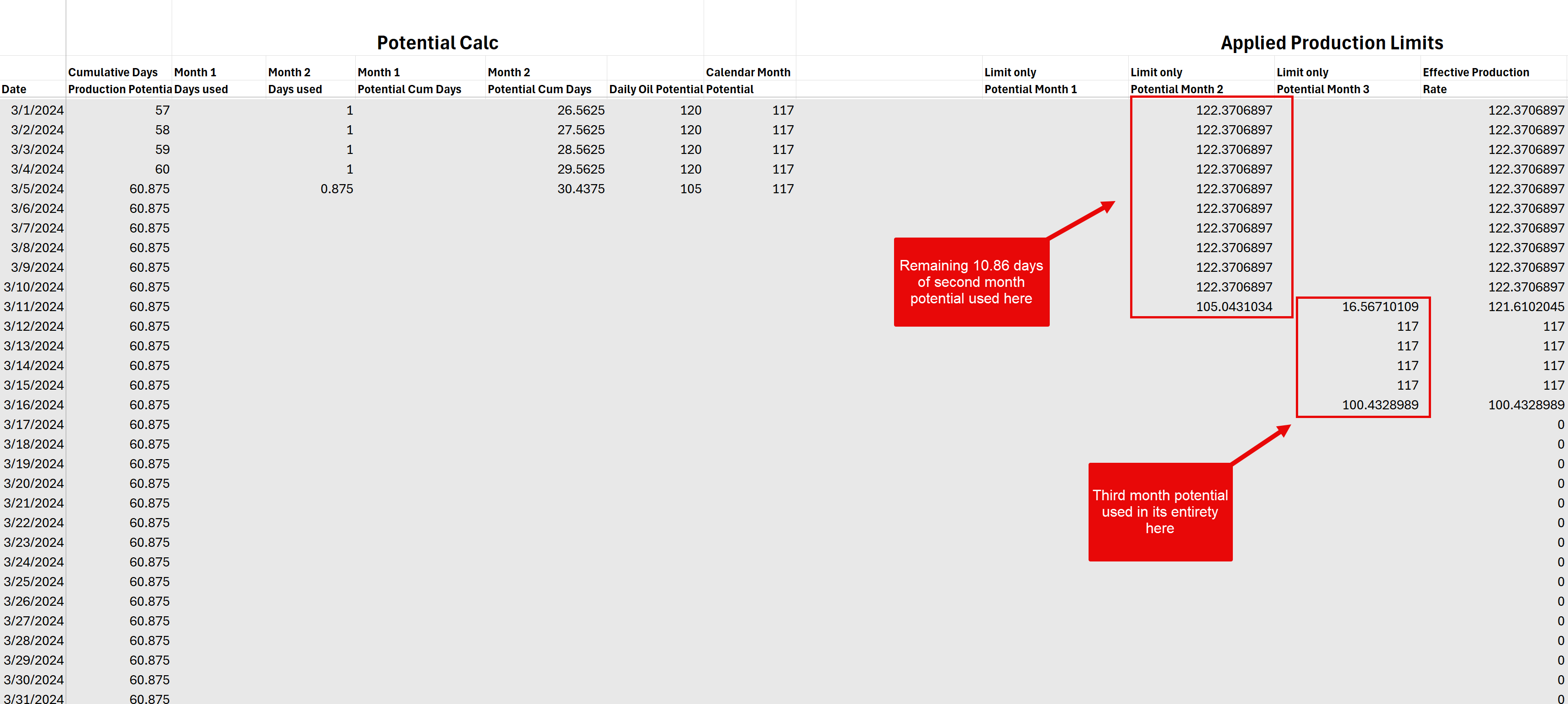
In March, there are 10.86 days left of the second month potential, followed by the entirety of the third month potential production. The production limit of 3100 bbl for March is not reached here
Downtime Calculation Example
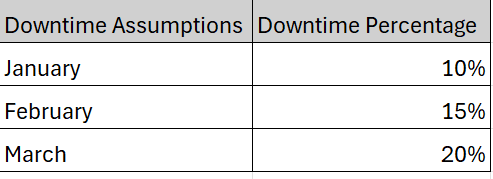
In this example, a different downtime percentage is applied for each calendar month:
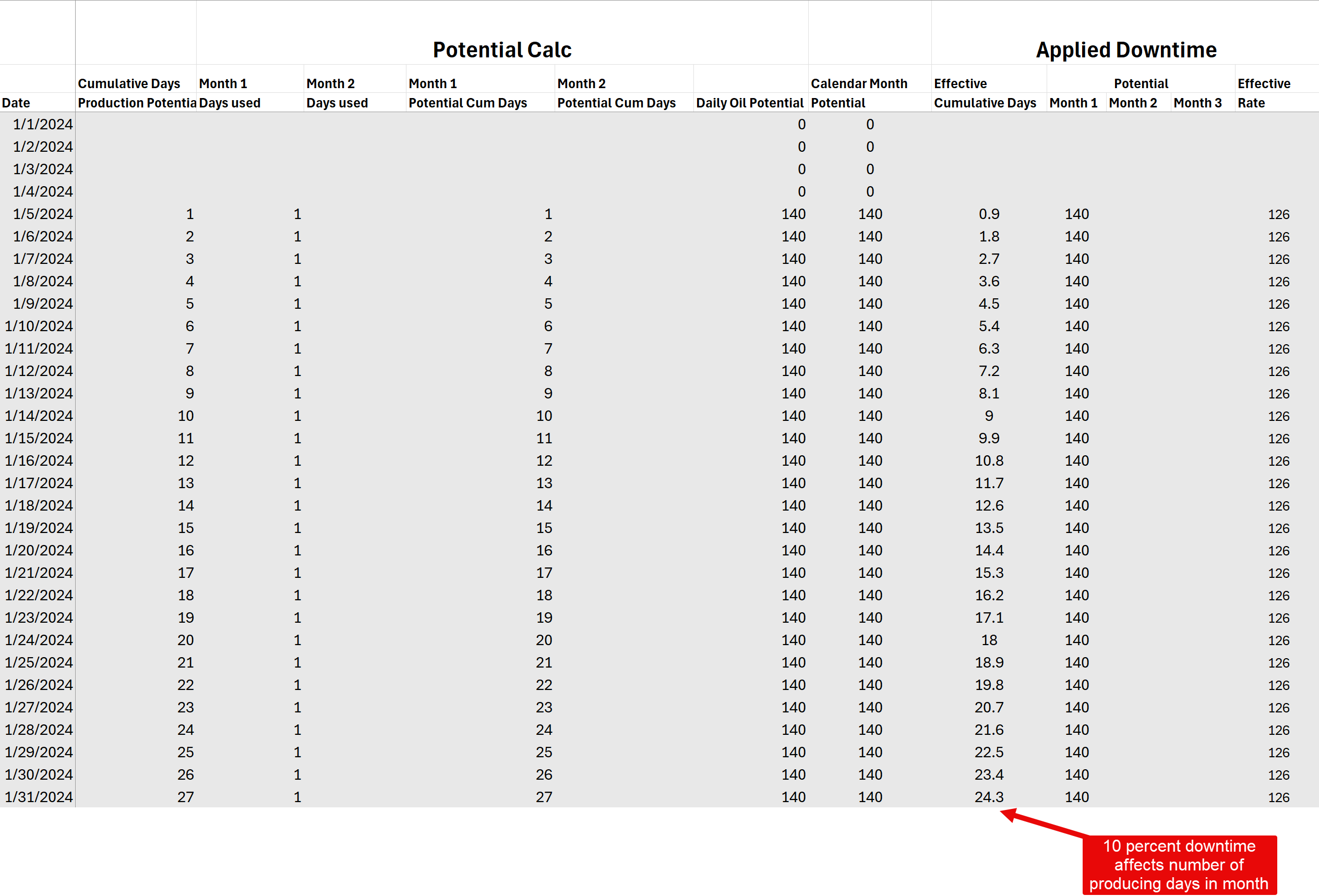
For January, a 10 percent downtime is applied starting on the first production date of January 5th. This results in 24.3 total days of production in January instead of the potential production of 27 days
For February, there are 3.15 days left in the first month potential so the first rate shown is 140*(1-0.15) = 119 bbl/d, and then production switches to the second month potential of 122.37 resulting in an effective rate of 122.37*(1-0.15) = 104.02 bbl/d
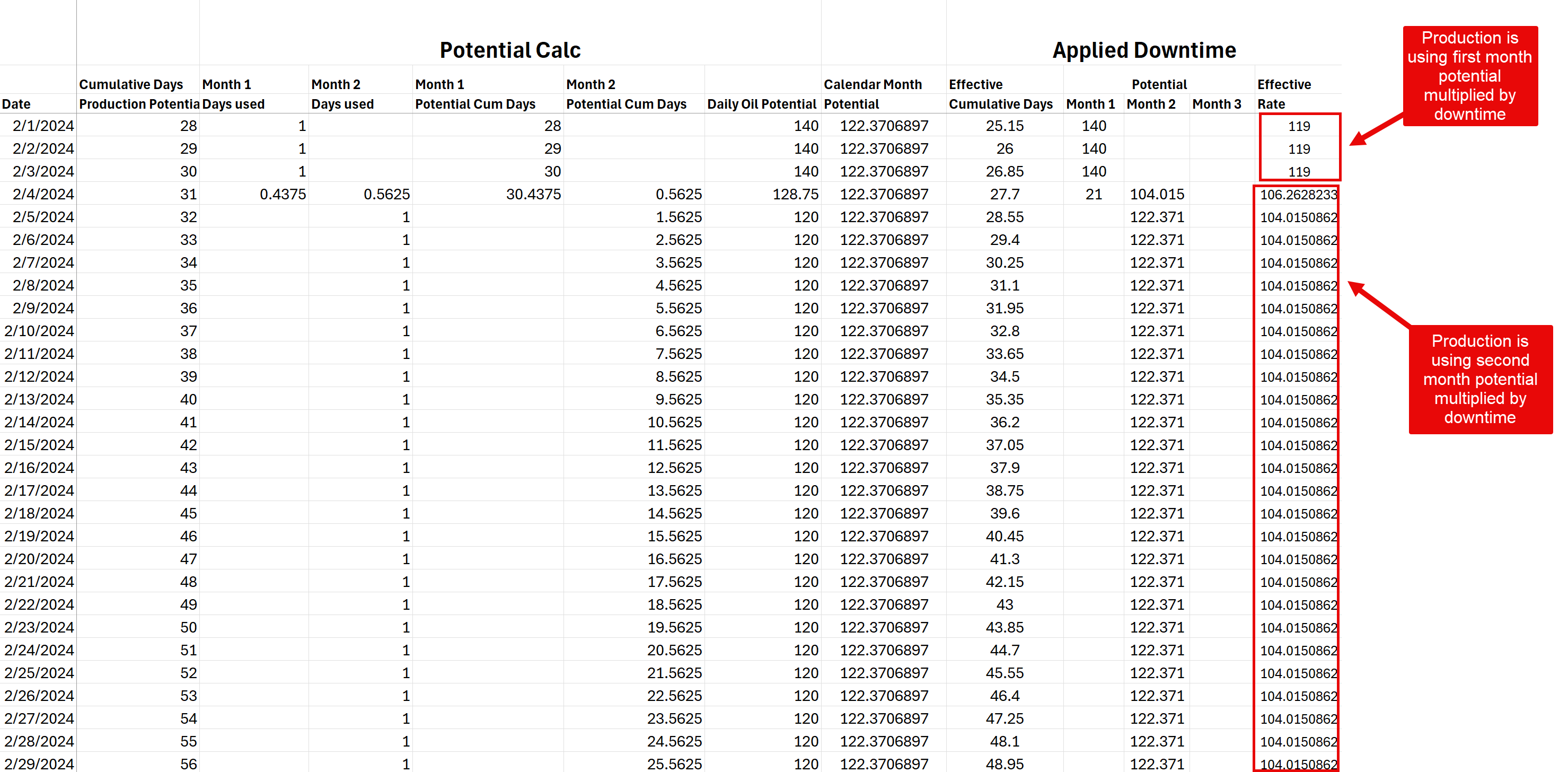
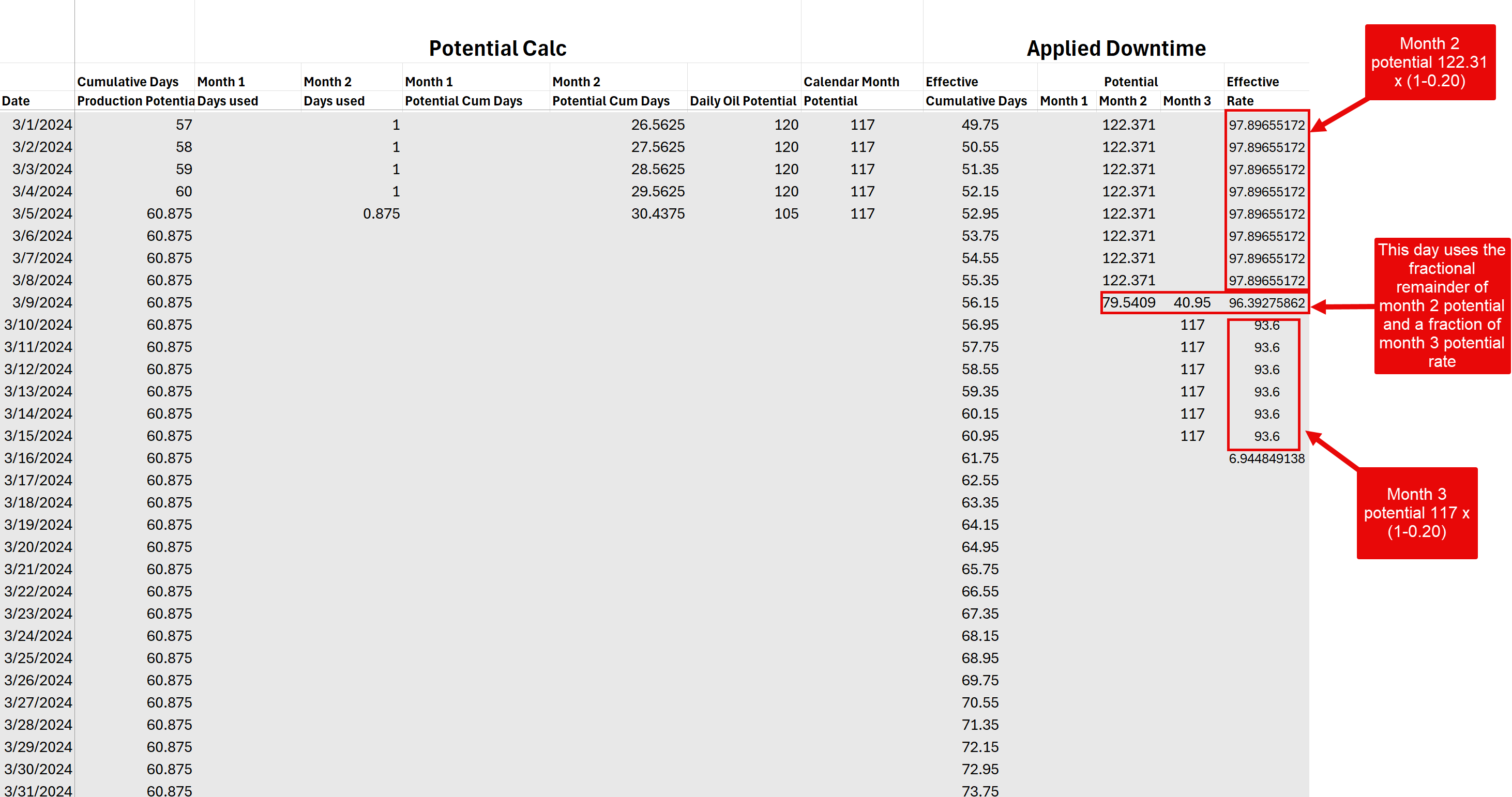
For March, there are 7.05 days left of the second month potential, resulting in an effective rate of 122.37 x (1-0.20) = 97.90 bbl/d for the first 8 days of the month. Production then switches to the third month potential resulting in an effective rate of 117 x (1-0.20) = 93.6 bbl/d